Mortgages in 2026
What Has Changed, How to Buy, and What to Expect

At the end of the first quarter of 2026, we at Whitewill ran some calculations. Revenue in Moscow’s primary residential real estate market—across the business, premium, and deluxe segments—fell by 15% compared to the same period in 2025, from 256 to 217 billion rubles. The number of units sold decreased by 17%.
At the same time, the average price per square meter rose by 13%—from 571,000 to 647,000 rubles.
The figures are contradictory, but they reveal a major trend: the market is restructuring. And mortgages are a key factor in this restructuring. Because without them, people aren’t buying today—not even in the luxury segment.
In 2025, the share of subsidized mortgage programs exceeded 80% of all loans issued. In 2026, according to NKR analysts’ forecasts, it could drop to 50%. The market will almost split in two: some buyers will opt for subsidized programs, while others will have to deal with market-rate mortgages or combined schemes.
What does this mean for you if you’re planning to buy an apartment in 2026? Let’s break it down step by step.

The Key Rate and Market-Rate Mortgages: What’s Happening
On June 22, 2026, the Bank of Russia set the key rate at 14.25% per annum. This is a high level, and it directly affects the cost of market-rate mortgages.
VTB expects the key rate to decline at a minimal pace and reach 13.5% by the end of 2026. Experts predict that by the end of the year, the key rate could fall to 11–12%, which will lead to lower loan rates. By winter, mortgage rates could fall below 15%.
In the business-class segment, which is more heavily dependent on mortgage rate fluctuations, the share of mortgage transactions in the first quarter of 2026 stood at 43%—virtually unchanged from the fourth quarter of 2025, when it was 46%. A year ago, it was 31%. In other words, people are taking out mortgages despite high rates simply because there are fewer and fewer other options.
Many buyers managed to close deals in the fourth quarter of 2025—before the new regulations took effect. The rest adopted a wait-and-see approach amid the decline in the key interest rate.
Family Mortgage: What Stays the Same, What Changes
The Family Mortgage is the most popular subsidized program in Russia. It has been in effect since 2018, and during that time, more than 2 million families have improved their living conditions with its help.
What Remains Unchanged Right Now
As of July 1, 2026, the family mortgage program continues to operate under the same terms and conditions. Deputy Prime Minister Marat Khusnullin confirmed that the government is not yet ready to make changes without comprehensive market preparation. A decision to change the program’s terms will not be made until at least October 1, 2026.
Current program terms:
-
Interest rate: 6% per annum.
-
Down payment—20% or more.
-
The maximum loan amount is 12 million rubles for Moscow, St. Petersburg, the Moscow and Leningrad regions, and 6 million rubles for other regions.
The program is available to families with a child under 7 years of age, a child with a disability, and families with two minor children who are purchasing real estate in cities with a population of up to 50,000 people in regions with low construction volumes.

What Has Changed Since February 1, 2026
New rules took effect on February 1: a family can take out only one subsidized loan, spouses must be co-borrowers, and they must share the same registered address with their child.
What Might Change Starting October 1
Several significant changes are under discussion.
First, the preferential rate on family mortgages may be limited to a 15-year term. Currently, the preferential rate is 6% for the entire term of the loan. If the new rules take effect, the government will compensate banks for lost revenue only during the first 15 years of the loan’s term. After that period, the rate will be recalculated using the formula “base rate + two percentage points.” If, after 15 years, the key rate returns to a neutral level of 7.5–8%, the borrower’s payment will increase from 6% to 9.5–10% per annum.
Second, a tiered interest rate based on the number of children may be introduced. According to *Izvestia*, the following parameters are under discussion:
-
For families with one child—12% in Moscow, St. Petersburg, and the Moscow and Leningrad regions.
-
For families with two children—10%.
-
With three children—8%.
-
With four children—6%.
-
With five or more — 4%.
In other regions, the rates will be 2 percentage points lower.
Third, there are plans to increase credit limits: for families with one child in metropolitan areas—up to 12,000,000 rubles, for families with two children—up to 15,000,000, and for families with three or more children—up to 18,000,000.
Fourth, if a family does not register their residence in the purchased apartment within 271 days, the bank will have the right to raise the interest rate to “base rate + 3–3.5%.”
Mortgages in the luxury and premium segments
When people talk about mortgages, they usually think of the mass market. But in 2026, mortgages made inroads into a segment where they had previously been rarely used.
In the first quarter of 2026, the share of mortgage transactions under shared-ownership agreements for new construction projects in Moscow rose from 45% to 58% compared to the same period in 2025. At the same time, the absolute number of such transactions fell by 18.2%—from 6,800 to 5,600. In other words, the percentage of people buying with a mortgage has increased, but the absolute number has decreased—the market is shrinking.
In the mass-market segment, the share of mortgages reached 79%. In the business-class segment, it’s 52%; in the premium segment, 23%; and in the luxury segment, 3%.
Three percent. It might seem like a negligible amount. But a year ago, the figure in the luxury segment was 1%. A threefold increase in a year is a clear signal. Even buyers of high-end real estate are beginning to view mortgages as a practical tool.
In the premium segment, the absolute number of mortgage transactions rose from 228 to 246, an increase of 7.9%. In the business class segment, it rose from 2,000 to 2,500, a 24.3% increase.
The most expensive mortgage transaction in Moscow in the first quarter of 2026 was 282.5 million rubles for a 162-square-meter apartment in the city center.
Buyers of luxury real estate tend to take out mortgages not because they lack funds, but because it is financially advantageous. The money that could have been invested in the apartment remains in circulation. And the mortgage rate—even at market rates—is often lower than the returns on alternative investments.


What to Do If You Plan to Buy in 2026
The key thing to understand is that you can’t judge a mortgage by a single advertised rate alone. Even behind an ad that says “up to 6%” lies a payment that depends on the apartment’s price, the region, the program’s limits, and what portion of the loan will be subject to the standard bank rate.
Here are a few practical tips.
First, don’t wait for the perfect moment.
Yes, rates may go down. But real estate prices have roughly doubled over the years of widespread mortgage incentives, outpacing inflation. Expecting the rate to drop to 6% while prices remain the same is an illusion. While you wait, prices per square meter keep rising.
Second. Calculate the total cost of the loan.
The market rate today is over 19%. The preferential rate is 6%. The difference in the monthly payment is enormous. If you qualify for a family mortgage, you should take advantage of it now, before the terms change.
Third. Consider combined loan options.
Not all banks offer preferential mortgages for amounts above the limit. But you can take out part of the amount at the preferential rate and the rest at the market rate. Yes, this is more expensive than a pure preferential mortgage, but cheaper than a loan entirely at market rates.
Fourth. Consider installment plans from the developer.
The main tools for boosting sales remain long-term installment plans with a minimal down payment and family mortgages. Many developers offer programs that allow you to postpone taking out a mortgage for a year or two. This gives you time to wait for interest rates to drop.
Fifth. Don’t be afraid of mortgages in the luxury segment.
Yes, the share of mortgages in the luxury segment is still small—3%. But it’s growing. And those who start using mortgages to buy expensive real estate gain an advantage: they maintain liquidity, and the apartment works for them.
What’s Next
The NKR forecasts a turnaround in the mortgage market. Whereas the main question used to be “Will I qualify for the 6% rate?”, now you’ll have to consider the entire transaction: the apartment price, the program limit, the down payment, the market portion of the loan, and the payment after approval.
According to the NKR’s forecast, in 2026 banks may issue 1.0–1.1 million mortgage loans totaling 4.7–5.1 trillion rubles—more than in 2025. The average mortgage loan amount in 2026 could reach 4.4–4.6 million rubles.
The average interest rate on new loans will rise above 11%. This isn’t a disaster, but it is a different reality—one in which subsidized mortgages are no longer the sole focus of the market.
At Whitewill, we handle mortgage transactions every day: from selecting a bank and verifying approval to providing full legal support. We see real-world cases and know which programs work and which don’t.
If you’re planning to buy an apartment and want to figure out which mortgage strategy is right for you, we’ll help you sort it out. We’ll find the bank with the best rate, review all the terms, and show you properties that fit your budget—both with and without a loan.
Submit a request on our website, and we’ll prepare a personalized calculation and a selection of options for you.



The best projects of the capital:

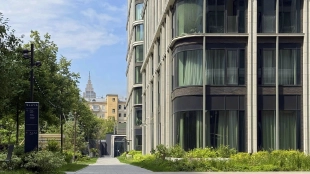

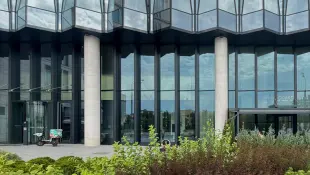
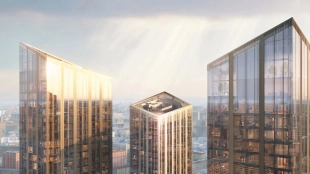

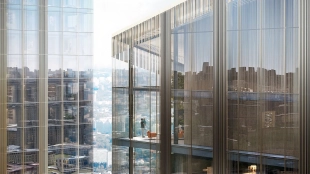
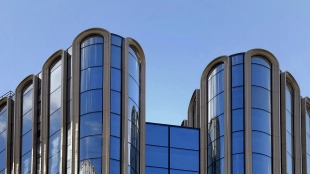
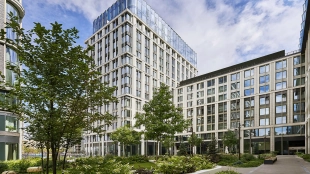
A complex of premium class apartments and apartments in five minutes from Belorusskaya metro station. You can choose options from compact studios to spacious apartments or three-bedroom apartments.
| Lots | Area from |
Price from
|
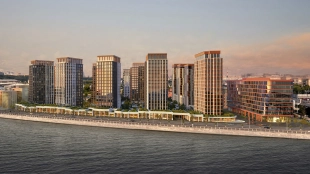
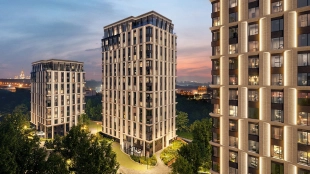
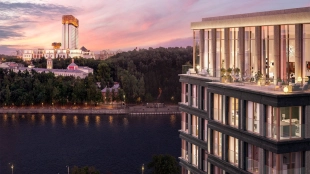
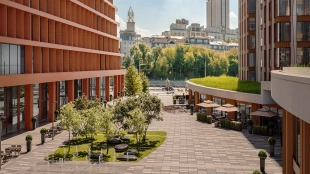

"Luzhniki Collection" is a collection of 12 clubhouses surrounded by a private park of 8 hectares. The name of the project was chosen for a reason - it is located 50 meters from the entrance to the legendary Luzhniki sports complex.
| Lots | Area from |
Price from
|
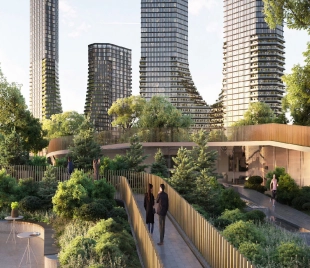
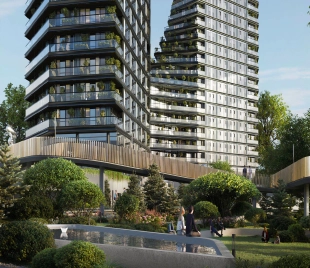

A premium class project on the territory of "Big City" in seven minutes from the metro station "Khoroshevo". The project consists of 6 buildings with apartments and office premises. All apartments have whitebox finish, which means that almost all noisy and dirty works are behind.
| Lots | Area from |
Price from
|
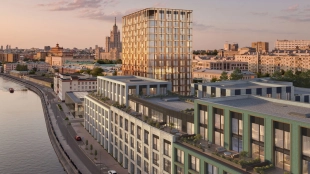
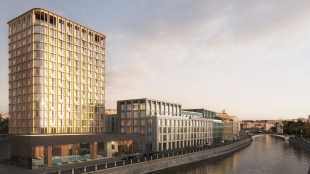
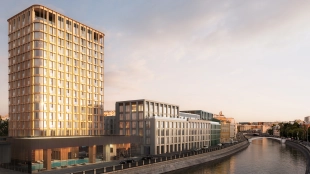
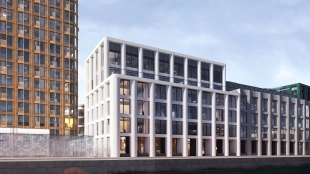
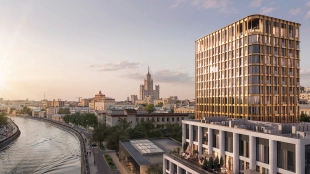
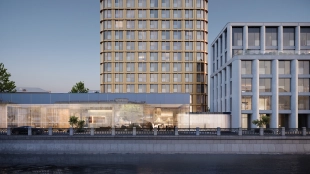
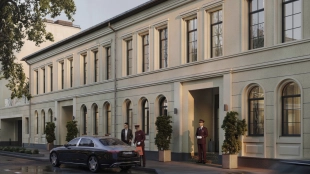
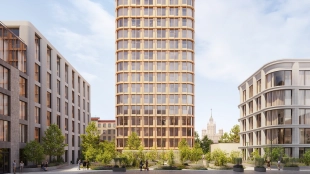
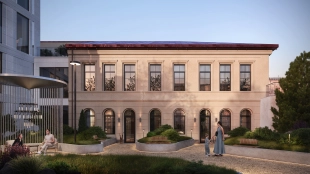
Deluxe class club quarter on Sadovnicheskaya Embankment in Zamoskvorechye. The project consists of 4 buildings from 1 to 10 floors. There are variants from 1-bedroom apartments to spacious 5-bedroom residences. You can also choose a penthouse with a terrace and a wood-burning fireplace or an urban villa with a private entrance.
| Lots | Area from |
Price from
|
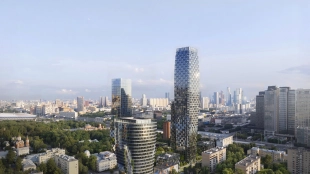
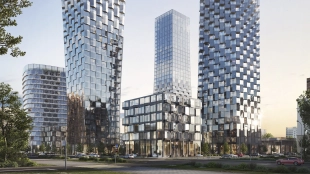
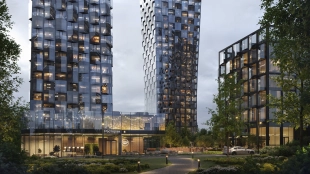
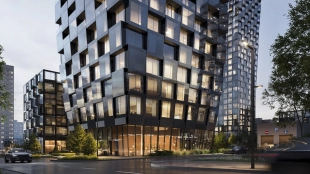
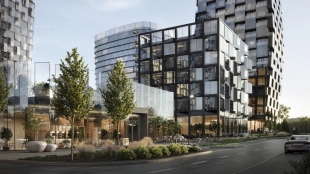
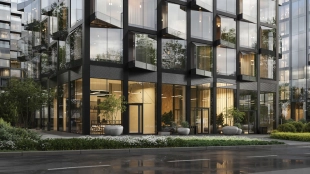



“C5” is a premium residential complex near Petrovsky Park, in one of Moscow’s greenest neighborhoods. The project consists of nine buildings: six residential towers ranging from 4 to 48 stories, an office building, commercial spaces, and an entrance pavilion. The collection features 770 residences with ceilings up to 4.8 meters high, including penthouses with terraces and views of the park, the “Moscow City” towers, and the historic city center.
| Lots | Area from |
Price from
|
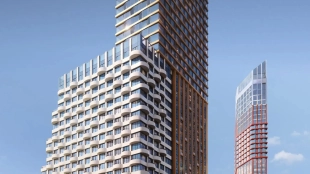
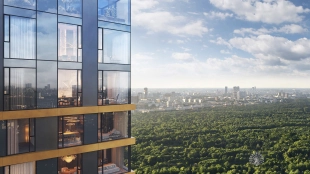

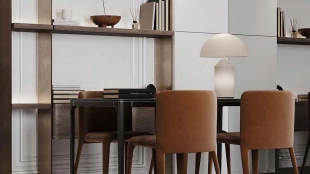

Business class complex in 4 minutes from the central alley of Sokolniki Park. There is a wide range of apartments: from compact studios to spacious family solutions. On the upper levels there are view apartments and penthouses. The internal garden continues the natural landscape of Sokolniki Park.
| Lots | Area from |
Price from
|
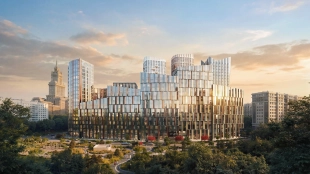
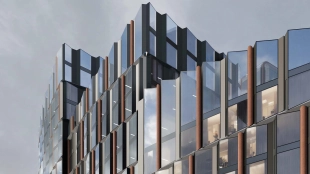
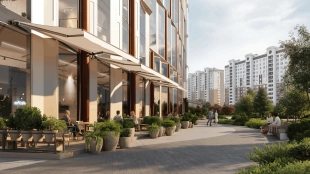
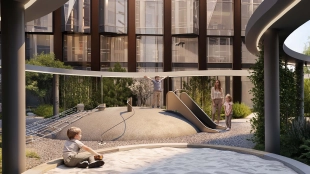
"Masters" is a premium-class neighborhood in a quiet part of the Aeroport district, just 15 minutes from the Kremlin. The composition is formed by 11 multi-height sections of variable storey from 8 to 25 levels, creating an integral architectural ensemble with an expressive silhouette. Panoramic windows offer views of the City skyscrapers and the green landscape of Khodynskoye Field.
| Lots | Area from |
Price from
|