“SberCity”—Moscow’s Dubai Hills

One of my goals is to shoot all the iconic projects and locations in the cities where Whitewill sells real estate. Through photo stories, I try to capture the atmosphere and architectural details of these locations to help our clients find the right place to live or invest.
One of the most popular neighborhoods to live in Dubai is Dubai Hills. The developer, Emaar, first built a large landscaped park with a variety of zones and settings, and then began carefully arranging residential neighborhoods around the park’s perimeter. I felt a similar atmosphere when I took a walk through the park at the “SberCity” project. The only difference is that here there’s also a river, a metro, and the buildings have far fewer stories.
The entire district is being built in Rublevo-Arkhangelskoye on a 460-hectare site. One-third of this space is set aside for parks, public gardens, and ponds. In terms of area, that’s 130 hectares—the equivalent of ten Zaryadye Parks. The main natural feature will be a 30-hectare pond. Together with the Moskva River, it will form the neighborhood’s water network. The total length of the river and pond embankments will be 5.4 kilometers. However, the pond is still under construction. Embankments are currently being built there, and a Japanese garden is being created.
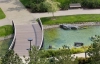
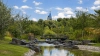
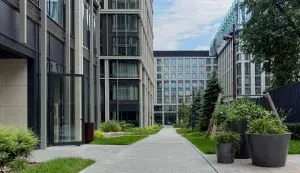
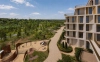
The photos show the first completed section of the park next to Block B10. Here, hills were built, conifers were planted, and a stream with cascades was created. Large natural stones were specially brought in from Karelia for this purpose. The landscape resembles a northern forest rather than a typical Moscow courtyard.
Along the cascading stream, walking paths have been built, and a top-notch skate park, a workout area, courts for beach volleyball and ping-pong, an amphitheater, children’s play areas, and separate areas for large and small dogs. There are quiet spots with benches, picnic areas, and access to the Moskva River embankment with a pier and water sports centers.
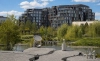
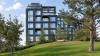
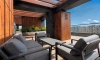
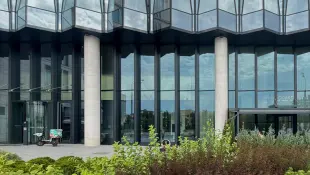
The architecture of the B10 neighborhood is built on the contrast between the city and nature. The dark facades resemble solid stone blocks—just like those lying by the stream in the park. Warm wood-effect accents soften the austere design. The windows form a complex pixelated pattern. The architects at UNK drew inspiration from the Japanese game of Go, where black and white stones gradually fill the board.
Two buildings, ranging from 7 to 9 stories in height, form a truncated wedge that opens toward the park. From a distance, the neighborhood looks understated, austere, and even harsh. But alongside the pine trees, flowers, hills, and water, this dark architecture unexpectedly becomes part of the landscape. The result is not just an urban building next to a park, but a large graphite-colored rock that gradually blends into the greenery.
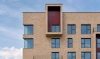
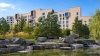
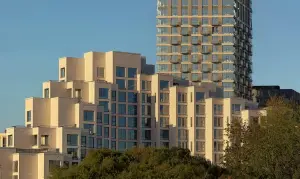
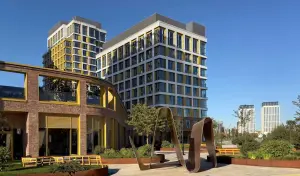
I also photographed one of my favorite blocks in “SberCity.” It’s numbered B11 and B12. I really like the bold contrast between the facades. The Italian firm Marco Casamonti & Partners was responsible for the architecture.
The buildings are low-rise, ranging from 4 to 10 stories. The neighborhood resembles European residential development more than a typical Moscow housing complex. From a distance, the facades appear almost white, but they are actually clad in sand- and beige-toned clinker bricks. The deep red loggias and balconies are finished with bright tempered glass. The project team calls this color “wine-red,” while Moskomarkhitektura calls it “berry-red.”
These vibrant volumes protrude from the main plane of the facade to break up the strict grid of windows and create the impression that dozens of small red rooms have been added to the tranquil stone buildings. Inside, there are private courtyards with lush landscaping and playgrounds. Cascades of terraces, tier upon tier, gently slope down toward the park.
The developer sold all the apartments before completion. A respectable result for the current market. There aren’t many units available on the secondary market. Prices per square meter are 400,000 rubles without finishes and 650,000 rubles with finishes.
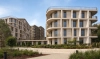
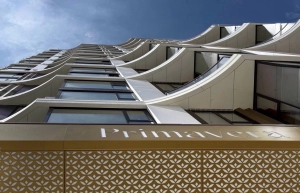
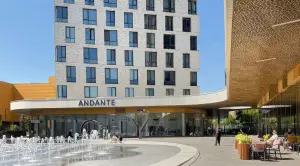
The photos above show blocks B19, B20, and B21. Seven buildings form a separate neighborhood next to the river park and the Moskva River promenade. There are a total of 550 apartments across the three blocks. The architectural concept was developed by the Italian firm “Marco Casamonti & Partners.”
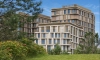
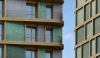
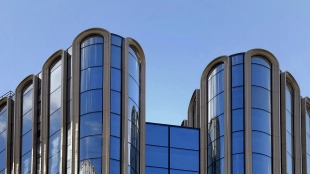
The first thing that catches the eye is the bronze. This warm metal runs along the entire facade: window frames, floor beams, and the slender vertical balusters of the balconies. It holds the building together, just as a jewelry setting holds a gemstone. And color is woven into the interior.
Glazed ceramic tiles, laid like scales, shift in hue from one section to the next. In some places, it’s the green of oxidized copper, a patina as if the facade had stood by the water for a hundred years. In some places, it’s warm terracotta, the color of fired clay. In others, a smoky blue that fades into the color of river water.
The ceramic isn’t matte. It catches the light. And the facade comes alive. In the morning, it’s one way; at sunset, another. The corners are rounded. The building doesn’t cut through space with sharp edges; it flows around it. The balconies extend in smooth arcs, and this is no mere whim of form. The lines echo the bends of the Moskva River, along which the neighborhood stands. The architecture respects its surroundings.
The homes in these neighborhoods fall into two classes: “Advanced” and “Superb.” These represent the highest tier in “SberCity.” The apartments feature panoramic windows, spacious kitchen-living rooms, walk-in closets, laundry rooms, and high ceilings. Some units have large terraces, while others are duplexes or feature patios. The result is almost like a country home—but with underground parking, a concierge, delivery from trendy restaurants, and a Moscow residence permit.
Some of the buildings come fully finished. The apartments are connected to a “smart home” system. You can control the lighting, climate, and heated floors using your voice or a smartphone. The system automatically shuts off the water in case of a leak and allows you to create scenarios such as “I’m Home,” “I’m Leaving,” or “Relax.”
The average price per square meter here is ₽750–850k. Top-tier units reach up to ₽1.2 million. Entry-level units start at ₽37 million.
Whitewill has been the sales leader for the past several years. Come check it out. The photos turned out great. Feel free to send them to Herman Oskarovich. The project has never looked this good through the camera lens before.



Best offers in Moscow:

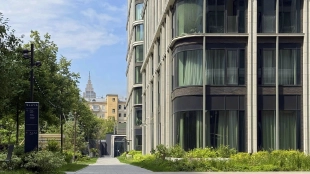

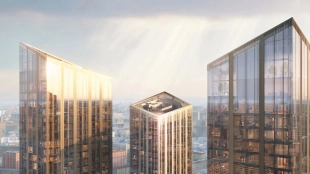

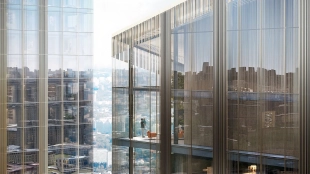
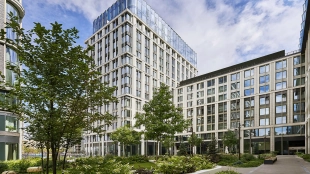
A complex of premium class apartments and apartments in five minutes from Belorusskaya metro station. You can choose options from compact studios to spacious apartments or three-bedroom apartments.
| Lots | Area from |
Price from
|
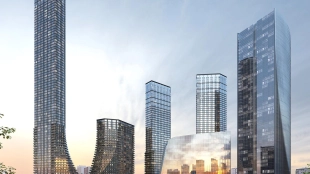
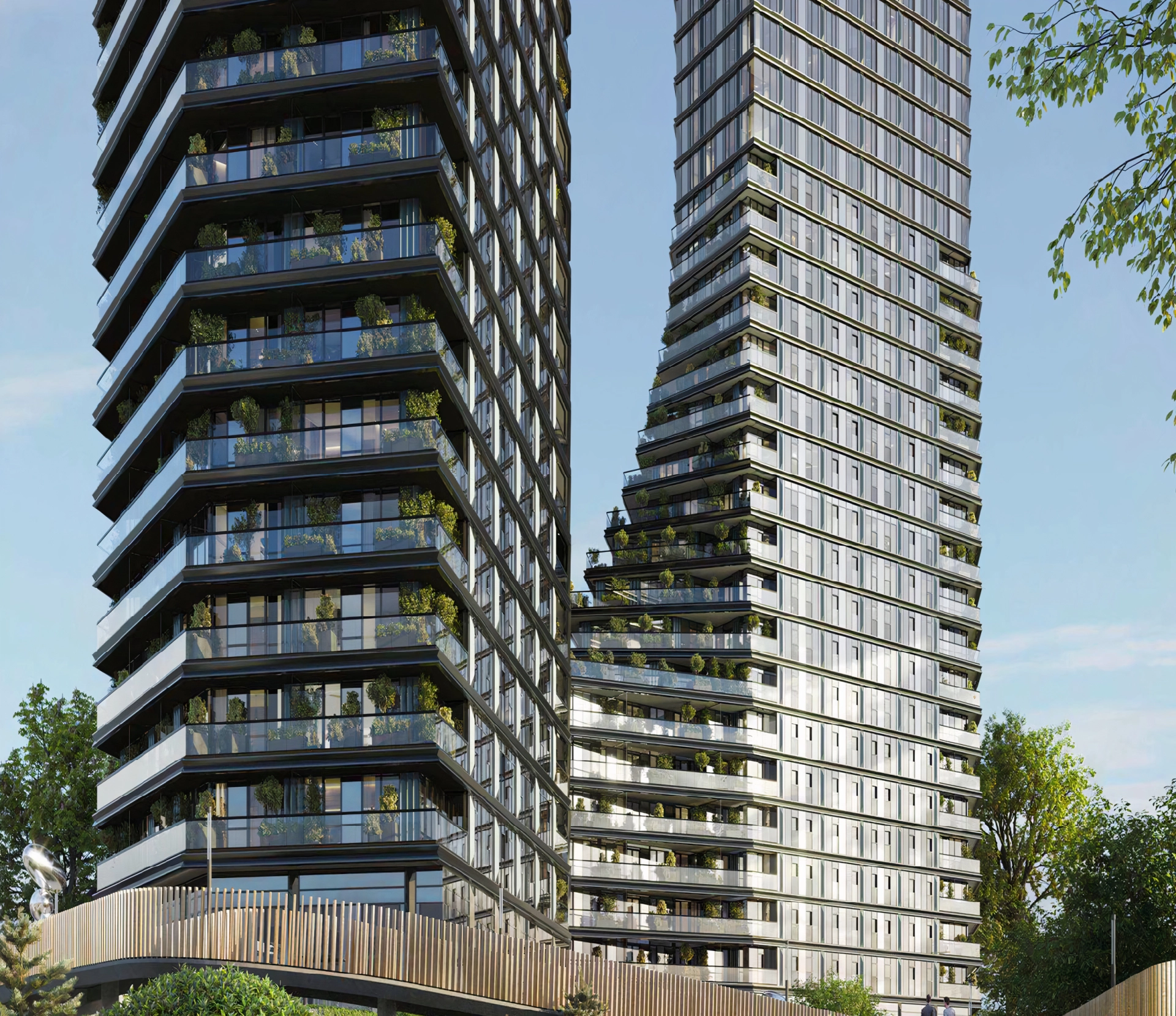
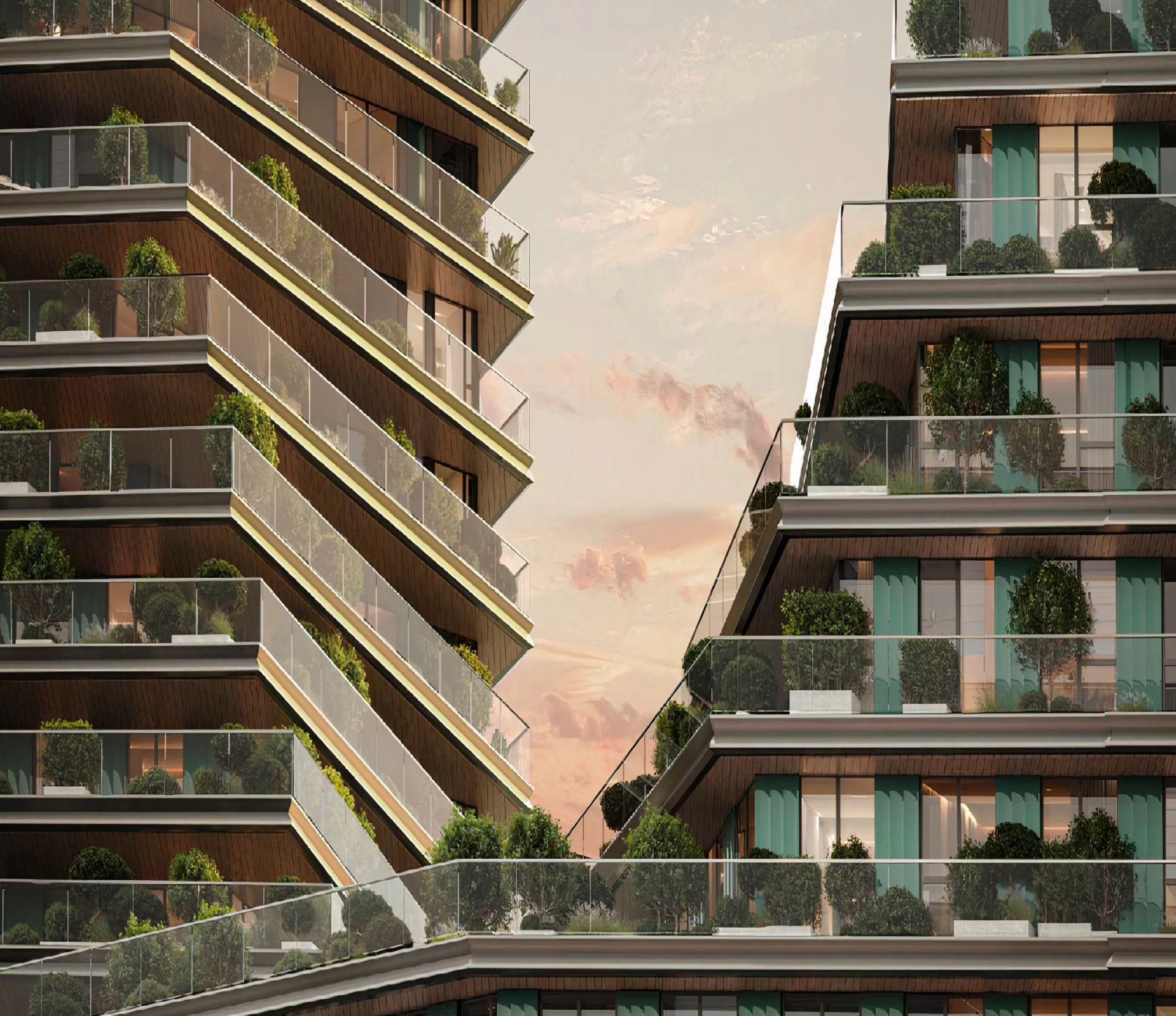
A premium class project on the territory of "Big City" in seven minutes from the metro station "Khoroshevo". The project consists of 6 buildings with apartments and office premises. All apartments have whitebox finish, which means that almost all noisy and dirty works are behind.
| Lots | Area from |
Price from
|
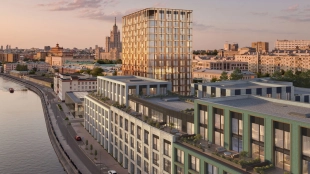
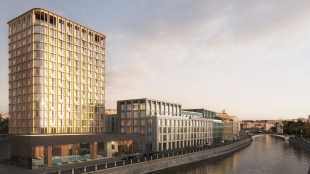
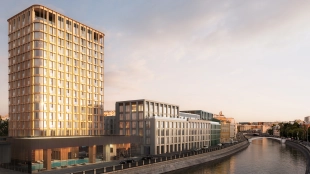
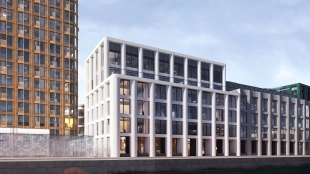
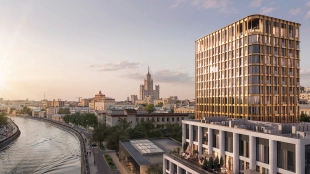
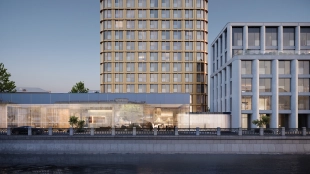
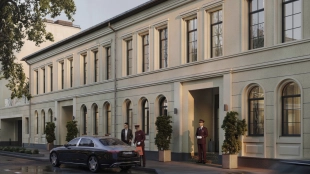
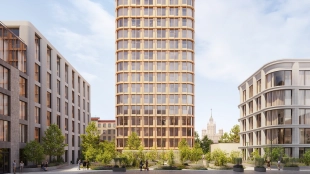
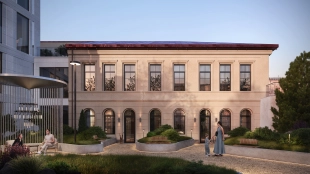
Deluxe class club quarter on Sadovnicheskaya Embankment in Zamoskvorechye. The project consists of 4 buildings from 1 to 10 floors. There are variants from 1-bedroom apartments to spacious 5-bedroom residences. You can also choose a penthouse with a terrace and a wood-burning fireplace or an urban villa with a private entrance.
| Lots | Area from |
Price from
|
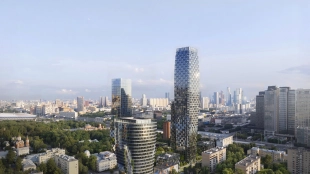
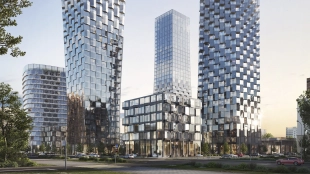
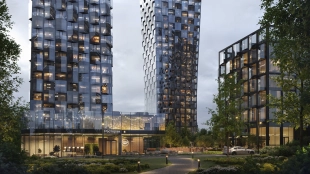
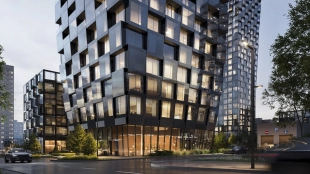
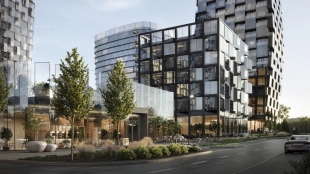
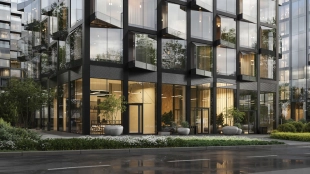
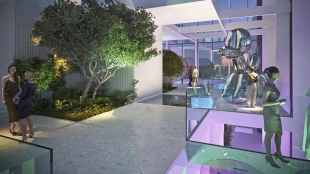
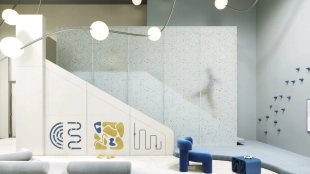
“C5” is a premium residential complex near Petrovsky Park, in one of Moscow’s greenest neighborhoods. The project consists of nine buildings: six residential towers ranging from 4 to 48 stories, an office building, commercial spaces, and an entrance pavilion. The collection features 770 residences with ceilings up to 4.8 meters high, including penthouses with terraces and views of the park, the “Moscow City” towers, and the historic city center.
| Lots | Area from |
Price from
|
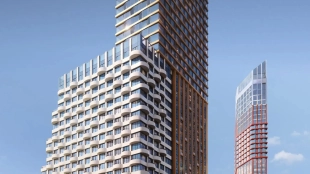
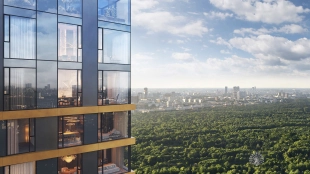
Business class complex in 4 minutes from the central alley of Sokolniki Park. There is a wide range of apartments: from compact studios to spacious family solutions. On the upper levels there are view apartments and penthouses. The internal garden continues the natural landscape of Sokolniki Park.
| Lots | Area from |
Price from
|
Read also: