Picasso's castle - how the artist bought himself a Cézanne mountain

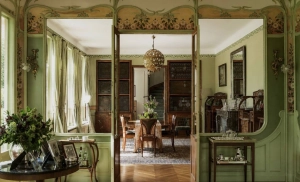
Today I have carefully collected and restored for you a batch of rare photos of the interiors inside the castle. Enjoy.
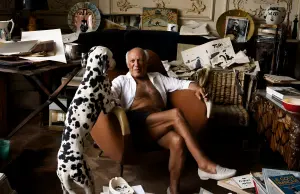
Pablo Picasso met his 76th birthday at his villa in Cannes. In these years he was no longer just an artist, but a legend. Every public appearance he made caused a stir.
Around his snow-white villa on the Côte d'Azur constantly swirled tourists, photographers and admirers of his work. Living there was becoming increasingly difficult. The artist wanted silence and privacy.
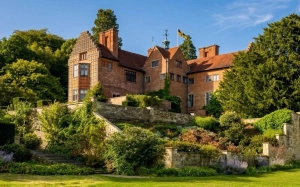
He shared his problems with his friend Douglas Cooper. He said he needed to find a new, quiet place to live. Not a villa, but some impregnable castle, hidden from prying eyes. Douglas was an aesthete, a collector and art historian. He understood Picasso's taste and knew which places would catch his fancy. He brought Pablo to the Chateau de Vauvenargues in the south of France.
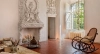
When Pablo stepped over the threshold of this solid castle, his eyes immediately flashed. This is it. I'm buying. The deal took a week. Picasso paid 140 million francs for his new estate. In current money, that's about $5 million.
Whether Douglas got his broker's commission on the deal is not known. But if he'd brought a client like that to Whitewill, he'd have made a nice profit.
Why did Picasso make his decision so quickly and not even look at other properties? There's an answer to that. The chateau stood at the foot of Mount St. Victoire. This is the same mountain that Paul Cézanne painted over and over again. The artist has 80 works with this motif.
Cézanne was for Picasso a figure of special magnitude. Pablo considered him one of the main teachers of modern art. Cézanne decomposed nature into form, volume and construction. Cubism grew from this foundation.
After the transaction, Picasso said with a smile: "Cézanne painted these mountains, and now they are mine." It was a powerful gesture. Someone was buying Cézanne's paintings. Picasso bought the whole landscape.
The area of his new estate was 700 hectares. That's seven square kilometers. The estate included forests, hills, farmland, alleys, fields and natural areas around the castle itself.
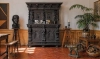
For a man tired of the limelight, this was a level of luxury above any yacht. The castle itself is stark and stone. With turrets. Almost a fortress. Inside - a real asceticism. Which is logical, because the core of the castle is over 600 years old.
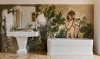
Picasso did some renovation in the castle, ran the heating and turned some rooms into an extension of his own workshop. He painted doors and chairs. In the bathroom, for example, there's a cool full-wall mural.
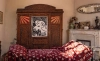
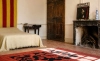
When everything was ready to live in, Picasso moved his personal art collection to the chateau. Among the works in his collection were Cézanne, Matisse, Renoir, Gauguin and other museum-level names.
Picasso also brought a rare mechanical piano. It could play music on special paper cards. At the time, this luxury gadget was considered the pinnacle of home technology.
Imagine the scene. A stone French chateau. On the walls are paintings by Cézanne and Matisse. The owner in tights and a white T-shirt is leisurely painting the bathroom wall, while in the next room a rare mechanical piano plays itself. Vibe.
After his death, it was in Vauvenargue that Picasso was buried. In the grounds of his own chateau. Later, his wife Jacqueline Picasso was buried nearby. It turns out that this purchase was not for years, but forever.
Now the estate remains the private property of the Picasso family and is closed to the public.
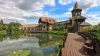
In the Moscow region, too, there are places where life feels like living in a castle. For example, the premium-class club cottage village "Trouville" near Odintsovo is inspired by the famous French resort Trouville-sur-Mer.
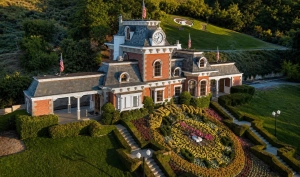
On a fenced territory of 16.5 hectares, 87 cottages, townhouses and apartment buildings in the Norman style are built. The facades are decorated with carvings, paintings, rustovka, platbands and spires.
Residents have access to the Jean Remy restaurant, fitness club with spa and swimming pool. Children will appreciate the playgrounds and sports fields. In summer it is pleasant to take a boat ride on the water surface, relax at the cascade of lakes and admire the waterfall.
Just 20 kilometers from the Moscow Ring Road on Minsk highway - and you are in a fairy tale.



The best country settlements in the Moscow Region:
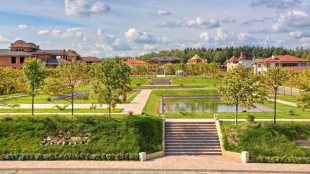
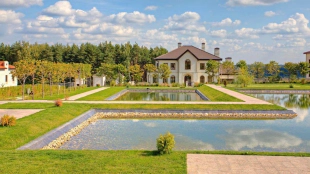
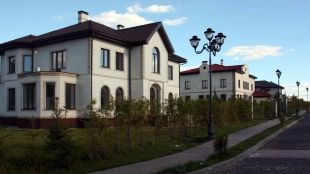
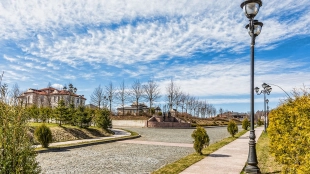
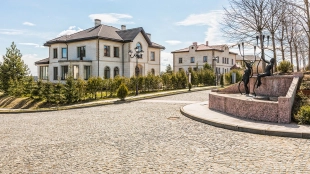
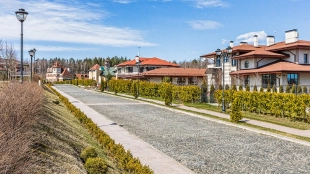
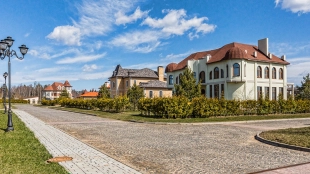
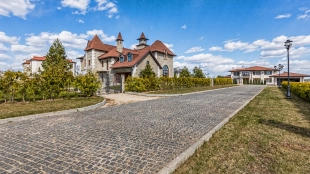
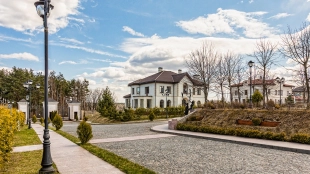
"Chateau Sovereign" is a gated club village with 81 mansions. The guarded territory has a spa with swimming pools, a fitness center, a restaurant, a cigar club, a wine cellar for 15,000 bottles and walking areas near water bodies. "Chateau Soveren" is the highest point of the Moscow region, some houses have views of Moscow City.
| Lots | Area from |
Price from
|
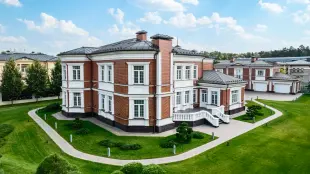
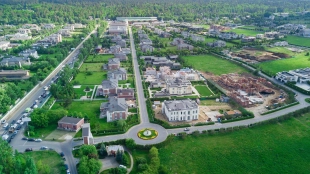
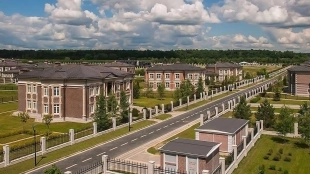
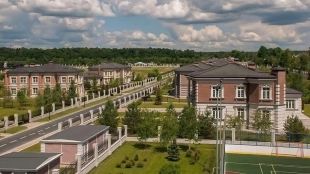
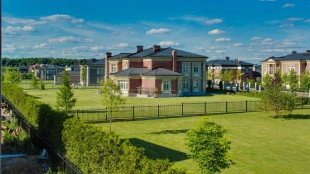
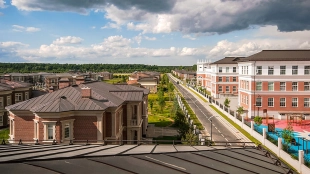
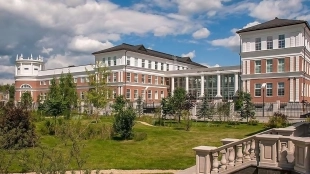

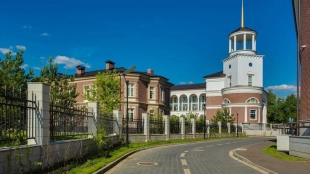
ParkVille is a cottage village of 57 cottages in English classical style and its own landscape park of 40 hectares. There is a large private school, kindergarten and observatory right on the territory for residents. The Barvikha Luxury Village shopping and entertainment complex is just 15 minutes away by car.
| Lots | Area from |
Price from
|
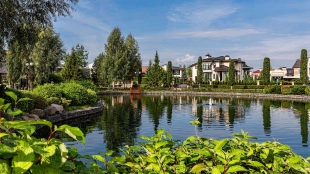
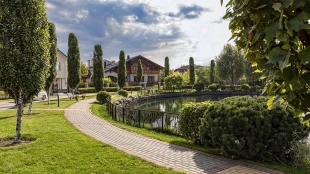
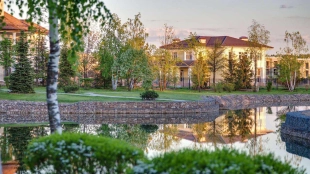
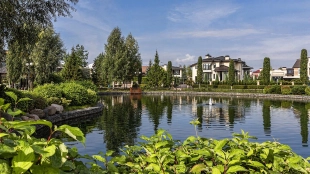
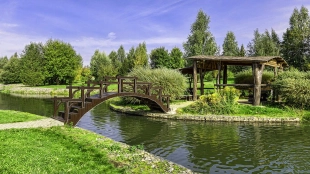
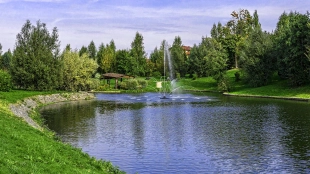
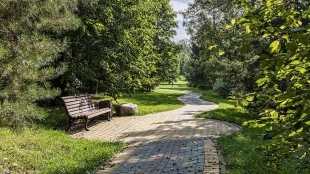
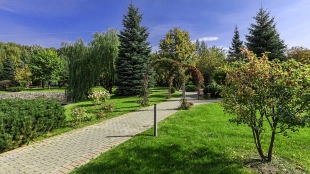
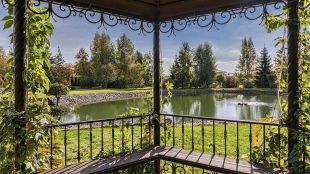
Monteville is an elite cottage village surrounded by forest along the Belyana River in Istrinsky district. There are 324 cottages in various styles and plots from 10 to 30 hectares. The protected territory has a luxurious garden with water bodies, walking paths, children's and sports grounds.
| Lots | Area from |
Price from
|
Read also: